
• Skip to main content
  • Skip to header right navigation
  • Skip to site footer
  • Home
  • About Denise
  • Forms
  • Fees & Policies
  • Online Classes
  • Upcoming Events
  • Contact
  • 713-823-4001
Denise O’Doherty

Denise O’Doherty

Licensed Professional Counselor, Licensed Marriage and Family Therapist, Drug and Alcohol Counselor, Registered Nurse

  • Relationship Counseling
    • Couples Therapy
    • Marriage Counseling & Family Therapy
    • Premarital Counseling
    • Domestic Abuse Counseling
    • IMAGO Relationship Therapy
  • Substance Abuse
    • Alcohol & Drug Addiction
    • SALCE Evaluations
  • LGBTQ+
    • Lesbian Therapy
    • LGBTQ+ Couples Therapy
  • Other Areas of Practice
    • Anxiety/Depression
    • BiPolar Disorder
    • Codependency/Personal Boundaries
    • Grief Counseling / Grief Therapy
    • Love Addiction/Love Avoidance
    • Overcoming Shame /Increasing Self-Esteem
    • Post Traumatic Stress Disorder
    • Dissociative Disorders
  • Gender Identity
    • Parents of Transgender Children
    • Gender Dysphoria
    • Cross-Dressing
    • Adult Children of Transgender Parents
  • Articles

Home » couples counseling » Page 5

couples counseling

BY Denise O'Doherty

Daily Affirmation

Your problems, your weaknesses, setbacks, regrets and mistakes teach you if you’re willing to learn, positive affirmation, couples counseling, relationship therapy, marriage counselingor they will punish you if you’re not. So let them teach you, every day. Take everything as a lesson learned. If you regret some of the decisions you have made in the past, stop being so hard on yourself. At that time, you did your best with the knowledge you had. At that time, you did your best with the experience you had. Your decisions were made with a younger mind. If you were to make these decisions with the wisdom you have today, you would choose differently. So give yourself a break. Time and experience has a wonderful way of helping us grow and learn to make better choices today, for ourselves and those we care for.


 

Filed Under: areas of practice, couples counseling, Marriage Counseling, relationship counseling, self esteem counseling
BY Denise O'Doherty

The Truth About Love – The Good The Bad, & The Ugly

In Pat Love’s book, “The Truth About Love“, she shares various misconceptions truth-about-love-bookabout relationships. I have turned these into the following TRUTHS about relationships as a guide for evaluating yours.

  • Relationships are never perfect. Problems don’t mean it wasn’t meant to be. It just means you have to work them through.
  • Once love dies, you can get it back with noticing, giving each other attention and celebrating the love and life you have. Happiness is wanting what you have.
  • Relationships are more than just chemistry.
  • It takes more than love to have a good relationship. Particularly trust, respect and good communication.
  • You can be in love and still be attracted to other people. Being in a committed relationship means that you still find others attractive and enjoy others being attracted to you, but you don’t act out on it.
  • It’s not about meeting the right person as much as it is about becoming the right person. If you work on being the best you can be, it is likely you will attract someone who appreciates you and whose values are more likely to be like yours.

The Four predictors of divorce are: Criticism, Defensiveness, Withdrawal and Contempt.

Therefore……

1) Instead of criticizing, ask for what you want. And when your partner criticizes, ask “What do you need?” and “How can I help?”

2) When you find yourself getting defensive: Stop. Start over. Call tome out. Apologize. Ask for more information. Take a deep breath.

3) When your partner withdraws, give him/ her more time and space. Find a way to manage your anxiety until the mood shifts. Entertain yourself. Do something fun. When you withdraw, let your partner know you need some time alone and about how long you need. If your withdrawal has nothing to do with the relationship, let this fact be known. If you have a problem, speak up.

4) When there is contempt between the tow of you, note this as a sign that the relationship could be in serious distress. Take time out to restore the good feelings between you. Do those activities that always work to bring you closer together.

These ideas and suggestions are often used in couples therapy and marriage counseling.

Good relationships give incredible rewards and unlimited opportunity for love and living a fuller life. Keep this in mind for your special relationship.


Filed Under: couples counseling, Marriage Counseling, relationship counseling
BY Denise O'Doherty

Galleria Couples Therapy & Marriage Counseling

Couples come to therapy for many reasons butrelationship counseling Galleria Texas, relationship therapy Galleria Texas, christian marriage counseling Galleria Texas, couple counseling Galleria Texas, marriage counseling questions Galleria Texas, pre marriage counseling Galleria Texas, premarital counseling Galleria Texas, marriage counselor Galleria Texas, family counseling Galleria Texas, counseling Galleria Texas, marital counseling Galleria Texas, marriage help Galleria Texas, marriage counselors Galleria Texas, marriage therapy Galleria Texas, family therapy Galleria Texas, divorce counseling Galleria Texas, relationship help Galleria Texas, marriage problems Galleria Texas, family therapist Galleria Texas, relationship problems Galleria Texas, family counselor Galleria Texas, counseling psychology Galleria Texas, counseling services Galleria Texas, marriage advice Galleria Texas, relationship advice Galleria Texas, premarital counseling questions Galleria Texas, therapists Galleria Texas, family counseling services Galleria Texas, counselors Galleria Texas, psychotherapist Galleria Texas, psychologist Galleria Texas, counselling Galleria Texas, counseling psychologist Galleria Texas, relationship Galleria Texas, how to save your marriage Galleria Texas, counsellor Galleria Texas, counselling services Galleria Texas, marital problems Galleria Texas, how to save a marriage Galleria Texas, how to save my marriage Galleria Texas, most frequently for one or more of the following: better communication, more trust, more emotional intimacy or more sexual intimacy.

Often, one partner wants the other to have more empathy, compassion and a better understanding of their perspective. Sometimes people don’t feel safe asking for what they need or want in the relationship. Sometimes people ask for what they want but never seem to get it. Whatever the reason, couples often reach an impasse, unable to get the empathy and understanding they need from each other by themselves.

Statistics today identify the four predictors of divorce to be:
Criticism, Defensiveness, Withdrawal, and Contempt

By eliminating these adverse coping skills and replacing them with loving and effective skills and techniques, relationships improve. Trust, communication and a loving connection can be restored and re-established.

How Couples Therapy Can Help

Therapy can provide lasting and positive results for couples to have increased satisfaction, and feel more love and connection in the relationship. Couples get faster results when both people are committed to making a positive change.

Therapy gives both people insights about what they want to see differently in themselves and what they want to see differently in their partner and the relationship. It focuses on discovering unmet needs, lost parts, and overcoming defensiveness that prevents intimacy. Therapy promotes insight to give you additional ways to perceive the problems and additional ways to get results.

Together we will:

  • Identify the issues and conflicts that prevent intimacy and safety.
  • Identify factors that you and your partner do to sabotage what you want
  • Help you develop insights and skills to let go of what’s not working and get what you need.
  • Use cutting edge communication skills and techniques to change counterproductive and upsetting behavior
  • Look at how you can support each other effectively and genuinely through the changes you make
  • Create a space where you reach a new level of success in your relationship

On the first visit, I usually ask the couple to come up with three responses to:

“This relationship would be better for me if……1)…. 2)….. 3)….. ”.

How I Can Help

I see my role giving attention, relationship counseling Galleria Texas, relationship therapy Galleria Texas, christian marriage counseling Galleria Texas, couple counseling Galleria Texas, marriage counseling questions Galleria Texas, pre marriage counseling Galleria Texas, premarital counseling Galleria Texas, marriage counselor Galleria Texas, family counseling Galleria Texas, counseling Galleria Texas, marital counseling Galleria Texas, marriage help Galleria Texas, marriage counselors Galleria Texas, marriage therapy Galleria Texas, family therapy Galleria Texas, divorce counseling Galleria Texas, relationship help Galleria Texas, marriage problems Galleria Texas, family therapist Galleria Texas, relationship problems Galleria Texas, family counselor Galleria Texas, counseling psychology Galleria Texas, counseling services Galleria Texas, marriage advice Galleria Texas, relationship advice Galleria Texas, premarital counseling questions Galleria Texas, therapists Galleria Texas, family counseling services Galleria Texas, counselors Galleria Texas, psychotherapist Galleria Texas, psychologist Galleria Texas, counselling Galleria Texas, counseling psychologist Galleria Texas, relationship Galleria Texas, how to save your marriage Galleria Texas, counsellor Galleria Texas, counselling services Galleria Texas, marital problems Galleria Texas, how to save a marriage Galleria Texas, how to save my marriage Galleria Texas,support and direction to help couples develop what they need to make a break-through rather than a break up. Most therapy is short term. I teach effective skills that you can use at home. The goal of therapy is to make changes so the couple will have increased satisfaction and feel more love and connection in the relationship.

Pre-Marital Counseling

I also meet with couples prior to weddings and holy unions. Pre-Marital counseling gives couples the opportunity to look at issues that often come up in relationships before they come up! This gives the couple the chance to see where they have differences in values and beliefs, and how they can prevent conflict when these differences arise. You don’t have to agree on everything to have a good relationship, but you have to respect the differences. I have a pre-commitment questionnaire that addresses relationship issues. These include: money, relatives, children, vacations, work, household chores, sex, dealing with crisis times of life, fidelity, romance, use of alcohol, tobacco, marijuana and other drugs, communication rules, personality differences, role of friends, physical appearance, jealousy, cultural background issues, personal goals, pre-nupual agreements and blending families. Discussing your areas of concern prior to your big day, will give you an insightful and valuable approach to minimizing future problems and maintaining respect for your partner and your relationship.

Let Us Know How I Can Help!

[contact-form-7 id=”1467″ title=”landing-page”]

Filed Under: couples counseling, Marriage Counseling, relationship counseling
BY Denise O'Doherty

Briargrove Park Couples Therapy & Marriage Counseling

Couples come to therapy for many reasons butrelationship counseling Briargrove Park Texas, relationship therapy Briargrove Park Texas, christian marriage counseling Briargrove Park Texas, couple counseling Briargrove Park Texas, marriage counseling questions Briargrove Park Texas, pre marriage counseling Briargrove Park Texas, premarital counseling Briargrove Park Texas, marriage counselor Briargrove Park Texas, family counseling Briargrove Park Texas, counseling Briargrove Park Texas, marital counseling Briargrove Park Texas, marriage help Briargrove Park Texas, marriage counselors Briargrove Park Texas, marriage therapy Briargrove Park Texas, family therapy Briargrove Park Texas, divorce counseling Briargrove Park Texas, relationship help Briargrove Park Texas, marriage problems Briargrove Park Texas, family therapist Briargrove Park Texas, relationship problems Briargrove Park Texas, family counselor Briargrove Park Texas, counseling psychology Briargrove Park Texas, counseling services Briargrove Park Texas, marriage advice Briargrove Park Texas, relationship advice Briargrove Park Texas, premarital counseling questions Briargrove Park Texas, therapists Briargrove Park Texas, family counseling services Briargrove Park Texas, counselors Briargrove Park Texas, psychotherapist Briargrove Park Texas, psychologist Briargrove Park Texas, counselling Briargrove Park Texas, counseling psychologist Briargrove Park Texas, relationship Briargrove Park Texas, how to save your marriage Briargrove Park Texas, counsellor Briargrove Park Texas, counselling services Briargrove Park Texas, marital problems Briargrove Park Texas, how to save a marriage Briargrove Park Texas, how to save my marriage Briargrove Park Texas, most frequently for one or more of the following: better communication, more trust, more emotional intimacy or more sexual intimacy.

Often, one partner wants the other to have more empathy, compassion and a better understanding of their perspective. Sometimes people don’t feel safe asking for what they need or want in the relationship. Sometimes people ask for what they want but never seem to get it. Whatever the reason, couples often reach an impasse, unable to get the empathy and understanding they need from each other by themselves.

Statistics today identify the four predictors of divorce to be:
Criticism, Defensiveness, Withdrawal, and Contempt

By eliminating these adverse coping skills and replacing them with loving and effective skills and techniques, relationships improve. Trust, communication and a loving connection can be restored and re-established.

How Couples Therapy Can Help

Therapy can provide lasting and positive results for couples to have increased satisfaction, and feel more love and connection in the relationship. Couples get faster results when both people are committed to making a positive change.

Therapy gives both people insights about what they want to see differently in themselves and what they want to see differently in their partner and the relationship. It focuses on discovering unmet needs, lost parts, and overcoming defensiveness that prevents intimacy. Therapy promotes insight to give you additional ways to perceive the problems and additional ways to get results.

Together we will:

  • Identify the issues and conflicts that prevent intimacy and safety.
  • Identify factors that you and your partner do to sabotage what you want
  • Help you develop insights and skills to let go of what’s not working and get what you need.
  • Use cutting edge communication skills and techniques to change counterproductive and upsetting behavior
  • Look at how you can support each other effectively and genuinely through the changes you make
  • Create a space where you reach a new level of success in your relationship

On the first visit, I usually ask the couple to come up with three responses to:

“This relationship would be better for me if……1)…. 2)….. 3)….. ”.

How I Can Help

I see my role giving attention, relationship counseling Briargrove Park Texas, relationship therapy Briargrove Park Texas, christian marriage counseling Briargrove Park Texas, couple counseling Briargrove Park Texas, marriage counseling questions Briargrove Park Texas, pre marriage counseling Briargrove Park Texas, premarital counseling Briargrove Park Texas, marriage counselor Briargrove Park Texas, family counseling Briargrove Park Texas, counseling Briargrove Park Texas, marital counseling Briargrove Park Texas, marriage help Briargrove Park Texas, marriage counselors Briargrove Park Texas, marriage therapy Briargrove Park Texas, family therapy Briargrove Park Texas, divorce counseling Briargrove Park Texas, relationship help Briargrove Park Texas, marriage problems Briargrove Park Texas, family therapist Briargrove Park Texas, relationship problems Briargrove Park Texas, family counselor Briargrove Park Texas, counseling psychology Briargrove Park Texas, counseling services Briargrove Park Texas, marriage advice Briargrove Park Texas, relationship advice Briargrove Park Texas, premarital counseling questions Briargrove Park Texas, therapists Briargrove Park Texas, family counseling services Briargrove Park Texas, counselors Briargrove Park Texas, psychotherapist Briargrove Park Texas, psychologist Briargrove Park Texas, counselling Briargrove Park Texas, counseling psychologist Briargrove Park Texas, relationship Briargrove Park Texas, how to save your marriage Briargrove Park Texas, counsellor Briargrove Park Texas, counselling services Briargrove Park Texas, marital problems Briargrove Park Texas, how to save a marriage Briargrove Park Texas, how to save my marriage Briargrove Park Texas,support and direction to help couples develop what they need to make a break-through rather than a break up. Most therapy is short term. I teach effective skills that you can use at home. The goal of therapy is to make changes so the couple will have increased satisfaction and feel more love and connection in the relationship.

Pre-Marital Counseling

I also meet with couples prior to weddings and holy unions. Pre-Marital counseling gives couples the opportunity to look at issues that often come up in relationships before they come up! This gives the couple the chance to see where they have differences in values and beliefs, and how they can prevent conflict when these differences arise. You don’t have to agree on everything to have a good relationship, but you have to respect the differences. I have a pre-commitment questionnaire that addresses relationship issues. These include: money, relatives, children, vacations, work, household chores, sex, dealing with crisis times of life, fidelity, romance, use of alcohol, tobacco, marijuana and other drugs, communication rules, personality differences, role of friends, physical appearance, jealousy, cultural background issues, personal goals, pre-nupual agreements and blending families. Discussing your areas of concern prior to your big day, will give you an insightful and valuable approach to minimizing future problems and maintaining respect for your partner and your relationship.

Let Us Know How I Can Help!

[contact-form-7 id=”1467″ title=”landing-page”]

Filed Under: couples counseling, Marriage Counseling, relationship counseling
BY Denise O'Doherty

Top 10 Tips for Asserting Your Agenda

For all those who need some help asserting their own wishes and needs.

  • Identify your agenda: Ask yourself: “what is it that I really want in this situation?” (be honest!)how-to-be-assertive
  • Give yourself permission to go after it:  Its OK for you to want something or to have a need, even if others want or need something else.  Your need is important too.  Ask yourself if it feels like you have permission to want it.
  • Give yourself time: Don’t just “give-in” because someone is being persuasive or because you’re in the habit of deferring. You can say “I really need to think about that” or “we need to discuss it”.
  • Say what you want: Let yourself say it, don’t assume others know. In a relationship or friendship also say why and what your feeling about it.
  • Make sure you’ve been heard: “I want to make sure you’ve understood my point of view, can you tell me what you heard?”  Get the other person to reflect it back and if they get it wrong tell them.  Keep doing this until you’ve been heard correctly.
  • Don’t accept having your thought dismissed: That’s just bad behavior and you can call them on it: “that sounds dismissive” or “you’re being dismissive”, or “it’s not OK to just dismiss my point of view”.
  • Beware of manipulation: We don’t always get your way in life but we can require others to negotiate in an honest way – don’t accept emotional blackmail or manipulation – even if you have in the past.  Call them on it – “I feel like you’re manipulating me”.
  • Know your fears: ask yourself what is it you’re fearing that’s holding you back from going after this thing.  What are you afraid will happen if you get your way?
  • Do a priority check-up: if you are allowing someone else’s needs to have priority over yours ask yourself if that is really what you want and if its appropriate in this situation.
  • Do the best friend check: if your best friend described the situation to you, what would you want him/her to do?  Think about this one!


            by Ami B. Kaplan, LCSW,
            Psychotherapy and Psyoanalysis, New York City


Filed Under: areas of practice, couples counseling, Marriage Counseling, relationship counseling, self esteem counseling
BY Denise O'Doherty

Defensiveness in Relationships and Marriage

In John Gottman’s book, marriage counseling Houston Texas,  couples counseling Houston Texas,  pre marriage counseling Houston Texas,  christian marriage counseling Houston Texas,  online marriage counseling Houston Texas,  free couples counseling Houston Texas,  free marriage counseling Houston Texas,  couple counseling Houston Texas,  couples marriage counseling Houston Texas,  marriage counseling denver Houston Texas,  marriage counseling questions Houston Texas,  christian couples counseling Houston Texas,  marriage counseling costs Houston Texas,  couples counseling for married couples Houston Texas,  free couple counseling Houston Texas,  marriage counsel Houston Texas,  intensive marriage counseling Houston Texas,  marriage counseling does it work Houston Texas,  marriage and family counseling Houston Texas“Why Marriages Succeed or Fail“, he talks about defensiveness as one of the problems in marriage. Defensiveness is often comes up in marriage counseling and couples counseling. It is a block to good communication. Without a non-defensive attitude, people feel unloved, unappreciated and lonely in their relationships.


In essence, defensiveness is self-protection, a natural response to ward off a perceived attack. For example:

” It wasn’t my fault”

defensive response:

“It was your fault”

“You always get tense around my mom”

defensive response:

“I do not”. “If you’d stand up for me when she criticizes me,  I wouldn’t get so tense.”  


“You don’t listen to me”

defensive response:

“Well, you don’t listen to me”


Of course, the major problem with defensiveness is that it obstructs communication in relationships. Rather than understanding each other’s perspective you spend your discussions defending yourselves. Nothing gets resolved, so the conflict continues to escalate and more discussions characterized by attack and defensiveness occur. To see whether you or your spouse/ partner is overly defensive, take the following self-test, preferably soon after a disagreement.

SELF-TEST: HOW DEFENSIVE ARE YOU?

  1. When my partner complains, I feel unfairly picked on.
  2. I feel misunderstood.
  3. I don’t feel that I get credit for all the positive things I do.
  4. What went wrong was actually not that much my responsibility
  5. To avoid blame, I have to explain why and how the problem arose.
  6. I feel unfairly attacked when my partner is being negative.
  7. When my partner complains, I realize that I also have a set of complaintsthat need to be heard.
  8. My partner’s negativity gets too intense, too out of proportion.
  9. My partner is too touchy, and gets his/ her feelings hurt too easily.
  10. There is some truth to my partner’s complaints, but it is not the whole truth.
  11. When my partner complains, I usually think, “I am innocent of these charges”.
  12. When my partner complains, I feel I have to “ward off” these attacks.
  13. I feel obligated to deny the complaints against me that are inaccurate.
  14. It seems that all my partner can do is find fault with me.
  15. during a hot argument, I keep thinking of ways to retaliate.

A “Yes” to several of these implies that you may be set up for a defensive stance.marriage counseling Houston Texas,  couples counseling Houston Texas,  pre marriage counseling Houston Texas,  christian marriage counseling Houston Texas,  online marriage counseling Houston Texas,  free couples counseling Houston Texas,  free marriage counseling Houston Texas,  couple counseling Houston Texas,  couples marriage counseling Houston Texas,  marriage counseling denver Houston Texas,  marriage counseling questions Houston Texas,  christian couples counseling Houston Texas,  marriage counseling costs Houston Texas,  couples counseling for married couples Houston Texas,  free couple counseling Houston Texas,  marriage counsel Houston Texas,  intensive marriage counseling Houston Texas,  marriage counseling does it work Houston Texas,  marriage and family counseling Houston Texas

The first step toward breaking out of defensiveness is to no longer see your partner’s words as an attack but as information. Your partner is trying to tell you something. Try to empathize with your partner. This is hard to do but it is possible and it effects are miraculous. Research shows that if you are genuinely open and receptive when your partner is expecting a defensive response, your partner is less likely to criticize you or react contemptuously when disagreements arise. Staying grounded may also help you feel more positive about yourself and your own self esteem, knowing that you are contributing to de-escalating an argument.

Of course, this change won’t occur overnight. But if you are consistently non-defensive, your spouse will finally get the happy message and your marriage and relationships will benefit tremendously.

Filed Under: couples counseling, Marriage Counseling, relationship counseling
BY Denise O'Doherty

We Can Rewire Our Brains To Crave Healthy Foods

What we eat is essential to how we feel. Food affects us both physically and emotionally. I learned in nursing school that 80% of all illnesses are a result of what we put in our gastrointestinal tract. A nurse practitioner recently told me it was 90%. For some illnesses, there is a direct factor , between what we eat and what illness we get. This interesting article challenges us to begin to think differently about food. It suggests that we can associate positive feelings with healthy foods and not just junk foods. When we eat better, exercise and maintain a positive attitude, we feel better, accomplish more and feel more satisfied with their life. Eating better could also be one factor in managing depression, anxiety and insomnia.

veg
Courtesy of reviewed.com

Have you ever taken a bite of chocolate cake and just felt… happy? That’s because your brain is being flooded with dopamine–a chemical that helps facilitate the sensation of pleasure. Under an MRI scan, you can actually see the part of the brain where this all goes down. We instinctually seek out things that makes that spot light up. So, do you think your brain would ever light up at the smell of… Brussels sprouts?

Dr. Susan B. Roberts of Tufts University thinks so. In a recent study, her research suggested that we can retool our brains to find junk food less appealing and healthy food irresistible.

The study consisted of 13 men and women, eight of which were subjected to a modified version of Dr. Roberts’ iDiet system. Participants also attended weekly group sessions for a period of 15 weeks.

Over time, subjects associate the “healthy” food with feeling nice and full, retooling their brains.

The idea behind the iDiet system is that foods with high protein, high fiber, and low glycemic-index carbohydrates tend to make you full without lots of excess calories and blood sugar spikes. Over time, subjects associate the “healthy” food with feeling nice and full, retooling their brains.

Roberts, who is also a trained chef, leveraged these traits to create meals that tasted good, satisfied hunger, and prevented large fluctuations in blood-sugar levels.

Aside from losing weight, MRI scans showed that the participants’ brains actually lit up less for junk food and more for healthy meals. And unlike gastric-bypass surgery, the participants did not report a decline in the enjoyment of eating.

“We also use a unique set of behavioral strategies that mesh with our dietary composition to emphasize hunger reduction and craving reduction,” Dr. Roberts told Reviewed in an email. “My ultimate goal is to help slim America down, and I believe this is an important advance.”

It should be noted that the study relied on a pretty small sample size, so further research is needed to confirm the results. However, it’s an interesting direction for nutritional science. Since the days of President Taft, people have been relying on unhealthy, sugary foods to give them that nice dopamine rush. But training our brains to light up at the sight of, say, kale is a crucial step in the pursuit of sustainable weight control.

Read The Original Article Here

Filed Under: areas of practice, couples counseling, Marriage Counseling, relationship counseling
BY Denise O'Doherty

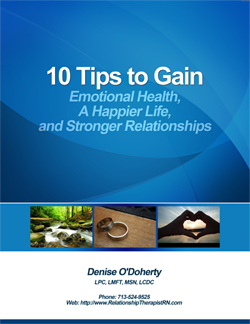
10 Tips To Gain Emotion Health, A Happier Life, & Stronger Relationships

10 Tips To Gain Emotion Health, A Happier Life, & Stronger Relationships

free-report-coverpage
CLICK REPORT COVER TO DOWNLOAD

A Special Note From Denise

It is no secret that we all want to feel happy, and each one of us has different ways of getting there.

Did you know that happiness, joy and peace are your natural state of being? Yes, it is. Every other emotional feeling is a learned response to circumstances… everything!

You have inadvertently learned to feel the way you are feeling right now, learned to settle for less than you really want, to make choices that fall short of happiness, and to accept not having your needs met. In fact, you may have mistakenly come to believe that’s just how life is. But, what you have learned is now holding you back like invisible, elusive walls.

Happiness is not something you have to strive for or achieve. It’s a state of being that happens when your needs are being met and you are in balance.

Depression, anxiety, frustration, anger, worry, stress, lethargy, guilt, fear, abandonment, judgment, grief, sadness, victimization, suicide, and every other negative state is simply a result of not getting your needs meet … of not knowing how to get your needs met. In this state you are out of balance, disempowered. Your life spins out of balance and spirals downward … or it simply stalls and you go nowhere.

There is hope! There is a way to stop this cycle and reach your emotional and happiness goals. Stop settling, and begin to live again.

Here are ten steps that you can take to increase your emotional health and bring more happiness into your life.

I hope you enjoy this information and it helps you in living a more happy life.

Sincerely,

Denise O’Doherty

Filed Under: couples counseling, Marriage Counseling, premarital counseling, relationship counseling, self esteem, self esteem counseling
BY Denise O'Doherty

Robin Williams’s Death: A Reminder That Suicide and Depression Are Not Selfish

Courtesy of Mashable.com

Most of us can think of at least one Robin Williams role that brings an instant smile to our face just thinking of his comedic genius and ability to make us laugh. With the news of his death from an apparent suicide as a result of suffering from severe depression, we can’t help but ask the question, “how can someone that seemed so happy on the outside, be hurting so much on the inside?”

The Guardian addressed the issue with depression and how it can be overwhelming difficult to deal with for some people. The article brought great insight on those suffering from depression.

News of Robin William’s death due to apparent suicide, said to be a result of suffering severe depression, is terribly sad. But to say taking your own life because of such an illness is a ‘selfish’ act does nothing but insult the deceased, potentially cause more harm and reveal a staggering ignorance of mental health problems

Many words can be used to describe Robin Williams. ‘Selfish’ should not be one of them. Photograph: Allstar/Universal PicturesSportsphoto Ltd.

News broke today that Robin Williams had passed away, due to apparent suicide following severe depression. As the vast majority of people will likely have already said, this was terribly heart-breaking news. Such an iconic, talented and beloved figure will have no shortage of tributes paid to him and his incredible legacy. It’s also worth noting that Robin Williams was open about his mental health issues.

However, despite the tremendous amount of love and admiration for Williams being expressed pretty much everywhere right now, there are still those who can’t seem to resist the opportunity to criticize, as they do these days whenever a celebrated or successful person commits suicide. You may have come across this yourself; people who refer to the suicide as “selfish”. People will utter/post phrases such as “to do that to your family is just selfish”, or “to commit suicide when you’ve got so much going for you is pure selfishness”, or variations thereof.

If you are such a person who has expressed these views or similar for whatever reason, here’s why you’re wrong, or at the very least misinformed, and could be doing more harm in the long run.

Depression IS an illness

Depression, the clinical condition, could really use a different name. At present, the word “depressed” can be applied to both people who are a bit miserable and those with a genuine debilitating mood disorder. Ergo, it seems people are often very quick to dismiss depression as a minor, trivial concern. After all, everyone gets depressed now and again, don’t they? Don’t know why these people are complaining so much.

I’ve said it before, and I’ll say it again; dismissing the concerns of a genuine depression sufferer on the grounds that you’ve been miserable and got over it is like dismissing the issues faced by someone who’s had to have their arm amputated because you once had a paper cut and it didn’t bother you. Depression is a genuine debilitating condition, and being in “a bit of a funk” isn’t. The fact that mental illness doesn’t receive the same sympathy/acknowledgement as physical illness is often referenced, and it’s a valid point. If you haven’t had it, you don’t have the right to dismiss those who have/do. You may disagree, and that’s your prerogative, but there are decades’ worth of evidence saying you’re wrong.

Depression doesn’t discriminatedepression

How, many seem to wonder, could someone with so much going for them, possibly feel depressed to the point of suicide? With all the money/fame/family/success they have, to be depressed makes no sense?

Admittedly, there’s a certain amount of logic to this. But, and this is important, depression (like all mental illnesses) typically doesn’t take personal factors into account. Mental illness can affect anyone. We’ve all heard of the “madness” of King George III; if mental illness won’t spare someone who, at the time, was one of the most powerful well-bred humans alive, why would it spare someone just because they have a film career?

Granted, those with worse lives are probably going to be exposed to the greater number of risk factors for depression, but that doesn’t mean those with reduced likelihood of exposure to hardships or tragic events are immune. Smoking may be a major cause of lung cancer, but non-smokers can end up with it. And a person’s lifestyle doesn’t automatically reduce their suffering. Depression doesn’t work like that. And even if it did, where’s the cut-off point? Who would we consider “too successful” to be ill?

Depression is not “logical”

If we’re being optimistic, it could be said that most of those describing suicide from depression as selfish are doing so from a position of ignorance. Perhaps they think that those with depression make some sort of table or chart with the pros and cons of suicide and, despite the pros being far more numerous, selfishly opt for suicide anyway?

This is, of course, nonsensical. One of the main problems with mental illness is that is prevents you from behaving or thinking “normally” (although what that means is a discussion for another time). A depression sufferer is not thinking like a non-sufferer in the same way that someone who’s drowning is not “breathing air” like a person on land is. The situation is different. From the sufferers perspective, their self-worth may be so low, their outlook so bleak, that their families/friends/fans would be a lot better off without them in the world, ergo their suicide is actually intended as an act of generosity? Some might find such a conclusion an offensive assumption, but it is no more so than accusations of selfishness.

The “selfish” accusation also often implies that there are other options the sufferer has, but has chosen suicide. Or that it’s the “easy way out”. There are many ways to describe the sort of suffering that overrides a survival instinct that has evolved over millions of years, but “easy” isn’t an obvious one to go for. Perhaps none of it makes sense from a logical perspective, but insisting on logical thinking from someone in the grips of a mental illness is like insisting that someone with a broken leg walks normally; logically, you shouldn’t do that.

Stephen Fry, in his interview on Richard Herring’s podcast, had a brilliant explanation about how depression doesn’t make you think logically, or automatically confide in friends and family. I won’t spoil it by revealing it here, but I will say it involves genital warts.

Accusations of selfishness are themselves selfish?depression2

Say you don’t agree with any of the above, that you still maintain that for someone with a successful career and family to commit suicide is selfish. Fine. Your opinion, you’re entitled to have it, however much we may disagree.

But why would you want to publicly declare that the recently deceased is selfish? Especially when the news has only just broken, and people are clearly sad about the whole thing? Why is getting in to criticize the deceased when they’ve only just passed so important to you? What service are you providing by doing so, that makes you so justified in throwing accusations of selfishness around?

Do you think that depression is “fashionable?” And by criticizing the sufferers you can deter others from “joining in”? Granted, we hear more about depression than we used to these days, but then we know what it is now. We see a lot more photos from Mars these days, because we have the means of doing so now, not because it’s suddenly trendy.

Perhaps you are trying to deter anyone else who might read your views from considering suicide themselves? Given that statistics suggest that one in four people suffer some sort of mental health problem, this isn’t that unlikely an occurrence. But if someone is genuinely depressed and feels their life is worthless, seeing that others consider their feeling selfish can surely only emphasize their own self-loathing and bleakness? It suggests that people will hate them even in death.

Maybe you know some people who have “attempted” suicide purely for attention? Fair enough; a debatable conclusion, but even if you’re right, so what? Surely someone who succeeds at committing suicide is a genuine sufferer who deserves our sympathy?

Perhaps you feel that those expressing sorrow and sadness are wrong and you need to show them that you know better, no matter how upsetting they may find it? And this is unselfish behavior how, exactly?

A brilliant but tortured individual has taken his own life, and this is a tragedy. But leveling ignorant accusations of selfishness certainly won’t prevent this from happening again. People should never be made to feel worse for suffering from something beyond their control.

If you feel you are dealing with depression, the charity MIND has many helpful sources, but there are many other avenues you can pursue.

As a therapist, I have dealt with family members, particularly adults and children of those who have suicided who ask, “Why didn’t they love me enough to stay alive for me?” It is particularly difficult for close ones to realize that suicide of a parent does not mean that you were not loved. It means that your parent was in so much physical and emotional pain, they couldn’t stand to live any longer.

Most people used the word “depression” lightly. Someone may say they are depressed when they are actually sad about something that could pass in a short period of time. Clinical depression is not like that. Clinical depression is when there are sysmptoms that last for a month or more such as 1) not eating or eating too much, 2) not sleeping or sleeping too much, 3) feeling extremely tearful, 4) feeling like you can’t focus or concentrate and 5) feeling like everyone else is out there having fun and you feel numb. When people have 2 or more of these symptoms, for more than one month, doctors usually prescribe antidepressants. People have described their symptoms as, “I feel like there’s a hundred pounds of weight that I carry on each shoulder”, “I feel like I’m swimming in a room full of molasses,” “I feel like there’s a grey cloud around me above me that won’t go away.”

Support those with clinical depression to seek professional help. Be empathetic. Depression is a real illness.


Filed Under: areas of practice, couples counseling, Marriage Counseling, relationship counseling, Substance Abuse
BY Denise O'Doherty

5 Tips For Raising Healthy, Resilient Kids

Say No To Perfect Parenting

As a culture, we’re always looking for perfection. We want the perfect body. The perfect job. The perfect kids.

Sure, it would be nice if your children were always well-behaved. If they picked up after themselves. Asked and answered with a respectful “please” and “thank you.” Did their homework without being told. But perfect kids? Would you really want them if you could have them?

“When we expect perfection from our children, we rob them of important experiences and the chance to learn and grow along the way,” said Dr. Craig Pierce, president and CEO of the Southwest Family Guidance Center and Institute and author of Parenting Without Distraction: The Attunetion® Approach. “In the process, they often end up missing out when it comes to developing independence, trust and self-esteem—in other words, some of the very traits that are necessary for an emotionally healthy life.”

Nonetheless, many people believe in the myth that if you do everything “right” as a parent, you’ll raise perfect children. In truth, there’s no such person as the perfect parent, or the perfect kid. But here’s the good news: according to Dr. Pierce, you don’t need to be a perfect parent to raise healthy, well-adjusted and resilient children; you just have to be an attuned one.

“Children whose parents pay attention and tune in to their needs sense that they matter,” said Dr. Pierce. “As a result, they tend to have higher self-esteem, get along better with their peers, and adjust more easily to school than children who are not given the same level of healthy attention.”

So how do you let go of perfect parenting and tune in to what’s best for your kids? Dr. Pierce has five tips.

  1. Be a positive mirror. parental-counseling2Much of a child’s self-image comes from how others perceive him or her. This is especially true of preschoolers, who learn about themselves from their parents’ reactions. “When you give your child positive reflections about strengths, skills, and talents, he or she learns to think well of him- or herself,” commented Dr. Pierce.

  2. Cheer on your child. Every child needs encouragement to believe in him- or herself and to take risks and grow. Give your child opportunities to demonstrate special skills. It may be drawing or singing, doing a summersault, or making breakfast. Whatever the skill, give your child a chance to shine.
  3. Make a play date with your child. Playing with your child sends a clear message: “You are worth my time. You are a valuable person.” Play can help you learn about your child—his or her temperament and capabilities at each stage of development. “And the more interest you show in doing things with your child early on, the more interest your child is likely to have in doing things with you while growing up,” said Dr. Pierce.
  4. Show trust. One of the most powerful things you can do as a parent is to let your child know you believe in his or her abilities. “For example, when Bella offers to brush the dog, let her. But instead of micromanaging how she does it, say, ‘I trust you to do a great job,’” explained Pierce. “This small gesture sends a power message to your child, a vote of confidence that says, ‘You can do it’ and ‘You are capable.’”
  5. Build healthy self-esteem. One of the most important gifts you can give your children is the confidence they need to handle their own lives. Fostering this sense of independence can be achieved in small steps. Some that Dr. Pierce suggests include encouraging your kids to entertain themselves—without electronics. “Let them learn to play by themselves. Doing so will teach them self-reliance, foster creativity, and give them time for solo pursuits.” Similarly, Dr. Pierce urges parents to let their kids take care of homework on their own. “Check for completion, but don’t correct mistakes. Teachers get better information when children do their own work, and children learn valuable lessons about maintaining focus and taking pride in their work.”

Another suggestion: parental-counselingAssign chores that are meaningful. “Teach your children to clean up after themselves, starting with their toys and their clothes. Show them how to organize and manage their belongings. This will help them appreciate the value of their possessions and foster a sense of personal responsibility and respect,” said Dr. Pierce. “You’ll also help them to recognize that the success of their family depends on everyone’s contribution.”

Forget this notion of perfect parenting. The more you can accept yourself and recognize that there will be good days and bad days as a parent, the more accepting and attuned you can be of your children and their needs. As Dr. Pierce reminds us, having a positive, loving approach to yourself and your children is the key to raising healthy, confident kids in a not-so-perfect world.


Filed Under: areas of practice, couples counseling, Marriage Counseling, relationship counseling
  • Previous
  • Page 1
  • Interim pages omitted …
  • Page 3
  • Page 4
  • Page 5
  • Page 6
  • Next
  • Facebook
  • Twitter
  • Google
  • YouTube
  • LinkedIn

Houston, TX 77019 | 713-823-4001 | Sitemap | Privacy Policy

Copyright © 2026 · All Rights Reserved · Maintained by Levy Marketing