
Original article by Jill Cory October 16, 2016 5:27 AM
You would know if you were in an abusive relationship, right? It would be obvious. Well, maybe not. Most women who experience abuse from a male partner spend months or even years thinking the relationship problem is something other than abuse. It’s a “communication issue” or “a failure to set boundaries.” Maybe you’ve thought your partner has a bad temper or a problem with anger management. Perhaps you think that you are doing something wrong or that there is something wrong with you. In our society, we aren’t very good at talking about abuse, so women are often left wondering.
A common myth is that abuse means only physical abuse. But, actually, there are many different types of abuse, including emotional, psychological, financial, and sexual abuse. These can be just as damaging as physical abuse. For example, abusive partners can attempt to isolate you or cut you off from sources of support, use sarcasm or threats to put you down, change moods to intimidate you, express jealousy, and become emotionally distant.
They can also refuse to allow you to practice your faith, devalue your knowledge or education, control the finances, or threaten to have an affair if you don’t do what they ask. These and many other examples are not generally thought of as abuse. You may know there is something “wrong” but may not label it as abuse. Here’s a list of seven things that abusive partners often do in their relationships. Ask yourself if your partner does any of these things:
- Takes away your freedom to choose what you want or need
Abusive partners are controlling and often do not allow their significant others to make choices for themselves. You may find yourself unable to ask for what you need or want without your partner becoming aggressive, angry, or reactive.
- Demeans you
Abusers are very critical. Everything—your ideas, your beliefs, your body, even your feelings—are “stupid” or wrong. You may find that you second-guess yourself—what to wear, what to prepare for a meal, who you can be friends with—because you are worried about your partner’s reaction.
- Is unpredictable and volatile
While abusers can behave in acceptable or even positive ways some of the time, they are also unpredictable and even explosive in their behavior. This leaves women feeling like they are “walking on eggshells” because they are not sure what their partners will do next. If this is happening for you, you may find yourself exhausted and confused as you try to anticipate your partner’s next move.
- Blames you or others for their abusive behavior
Abusers rarely take responsibility for their behavior. Rather, it is everyone else’s fault. The boss is causing him stress. The kids are making noise. You are “pushing his buttons.” The abuse is not your fault, but he may leave you feeling like it is.
- Uses the “silent treatment” to punish or frighten you
Abused partners find that they are punished in many ways when they do things that their partner does not like. The “silent treatment” is just one such punishment. The “silent treatment” can be terrifying for women because they do not know what will happen next.
- Limits your access to money
Abusive partners are often very controlling when it comes to money. Since we need money to do just about anything, it is a powerful way to control someone. If your partner controls your access to money or other necessary resources such as a car, the computer, or the phone, you are being abused.
- Apologizes for their behavior and promises to change but never does
Part of the pattern of abusive behavior includes periods of behavior that appears positive—times when he might seem caring and helpful. During these “honeymoon periods,” he might even apologize for hurtful behavior and promise to change. But abuse is cyclical, and although he might promise to change or appear to be changing for a while, he will not be able to sustain it. His behavior will deteriorate again, and he will revert to controlling, frightening, or explosive behavior.
If you have experienced some of these behaviors from a current or past partner, you have likely experienced abuse. That is a hard reality to face. If you are with your partner, it may be hard to think of them as abusive. Your partner might not fit the stereotype of an abuser any more than you fit the stereotype of an “abused partner,” but that doesn’t matter. People who experience abuse come from all economic, racial, religious, and ethnic backgrounds. Abuse is not just reserved for the poor or weak—it can happen to anyone.
If you or someone you know is in an abusive relationship, find someone to talk to that you can trust, to help you with the next steps of how to deal with this. Processing your feelings and the situation may lead to making changes or helping someone else make them. Therapy can help. The important thing is to share it and not deal with it alone.
 Add in time for religious activities, home repair, not to mention keeping up with the cooking, cleaning, laundry, bill-paying, personal hygiene, shopping and the list goes on….not to mention sleep, recreation, hobbies. Carving out time for the two of you can feel like one more obligation to fulfill.
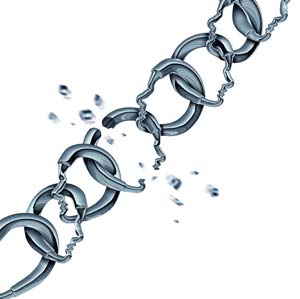 Think of reconnecting the same way you save money: pay yourself first. Carve out time for your relationship and spent that time together even if it means cheating other aspects of your life. Put a date night on the calendar and attach a serious penalty for breaking it. Don’t wait until you have time for each other: take time for each other and make other things wait!
 Controlling behavior also can be compensation for a time or situation when the partner had no control such as growing up, a stressful job, or a former relationship. Living without personal control can increase the motivation to seize control whenever possible.
 As soon as you catch yourself trying to control your partner, stop and apologize: ”There, I did it again, I’m sorry”. It’s also a good idea to tell them what you are sorry for so they know you “got it”.
 They prevent us from being in harmony with the world. Resentments are hardened chunks of anger. They loosen up and dissolve with forgiveness and letting go.
 reached out to me for sex and I turned my back, pushed you away, or made lame excuses to avoid any romantic or sexual time together? How about if I went day after day ignoring your sexual needs?
 them anymore.
 commitment to be available as a sexual/ sensual/ intimate partner whenever either of you has the desire.
 stranger mean more to you than your own family? You have ruined all our lives just to follow your feelings and please yourself.
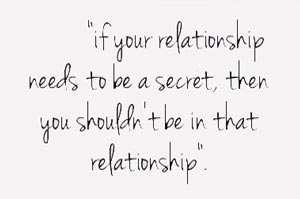 Most people, however, don’t decide- they slide into an affair. Conscious thought doesn’t enter into the picture. An innocent acquaintance gradually becomes more intimate until it’s the primary source of pleasure. An innocent acquaintance gradually becomes more intimate until it’s the primary source of pleasure. The affair begins with two people sharing information or an activity; they bond around personal contact and mutual experiences. With little or no conscious thought, they cross the line into infatuation. Once the affair relationship start to provide a sensual or sexual high, then it’s “game over.” You are now under the influence of infatuation, one of the strongest forces found in nature. Infatuation sets up an insatiable craving for more contact that’s practically impossible to resist.

 These can also be addressed in psychotherapy with a professional who is familiar with guiding you through to build trust, safety and a positive connection.
 As strange as it sounds, criticism has a positive purpose: it’s an attempt to evoke a change in the relationship. Complaint, comparison, and blame are ways of letting you know something needs to shift: but even though it is aimed toward a solution, criticism often becomes the problem.
 end by trying harder and apologizing. Others defend by withdrawing, getting angry, or loosing hope. When criticized, your psyche switches into a defensive mode, and while this protection is in place, connection with your partner is broken. With repeated criticism you’ll eventually associate your partner with pain, not pleasure, leaving you no choice but to tune out and disconnect. If and when this happens, the distance between you will widen at an alarming rate.
 You can transform criticism by stating the underlying desire. Be clever, not critical. You can eliminate the need for criticism altogether by catching your partner in the act of doing something right – even a seemingly mundane thing – and acknowledging it.
 It’s not inappropriate to ask what is most pleasurable or most exciting for married couples, but meaningful lovemaking is so much more than creating greater sexual arousal and climaxes. In my view, “healthy” protects happy pleasure it doesn’t threaten it.
 When sex becomes the relationship it’s like trying to support a fifty story hotel on a foundation made of toothpicks. You build a healthy sexual relationship by building a healthy marriage on all levels: emotionally, spiritually, intellectually, and relationally. As Dr. Harry Schaumberg so ably puts it, “To be spiritually mature, you must be sexually mature; to be sexually mature, you must be spiritually mature. And I’d say that to be spiritually mature, and sexually mature, you need to be relationally mature. In other words, a mature marriage is a three legged stool of spiritual, relational, and sexual maturity.”
 pain’; media portrayal of ‘S and M’ roles often involves humorous exaggeration. Grim reality exists that we in our cultural denial attempt to avoid and deflect with humor. For many, the combination of pain and sex is as repugnant as violence.”
 expression of your faith), as a person who is cherished and loved. In unhealthy sexuality, the sexual experience leaves you feeling empty, alienated, almost like you’re role-playing or an object.
 Marriage can be that sacred place.