
• Skip to main content
  • Skip to header right navigation
  • Skip to site footer
  • Home
  • About Denise
  • Forms
  • Fees & Policies
  • Online Classes
  • Upcoming Events
  • Contact
  • 713-823-4001
Denise O’Doherty

Denise O’Doherty

Licensed Professional Counselor, Licensed Marriage and Family Therapist, Drug and Alcohol Counselor, Registered Nurse

  • Relationship Counseling
    • Couples Therapy
    • Marriage Counseling & Family Therapy
    • Premarital Counseling
    • Domestic Abuse Counseling
    • IMAGO Relationship Therapy
  • Substance Abuse
    • Alcohol & Drug Addiction
    • SALCE Evaluations
  • LGBTQ+
    • Lesbian Therapy
    • LGBTQ+ Couples Therapy
  • Other Areas of Practice
    • Anxiety/Depression
    • BiPolar Disorder
    • Codependency/Personal Boundaries
    • Grief Counseling / Grief Therapy
    • Love Addiction/Love Avoidance
    • Overcoming Shame /Increasing Self-Esteem
    • Post Traumatic Stress Disorder
    • Dissociative Disorders
  • Gender Identity
    • Parents of Transgender Children
    • Gender Dysphoria
    • Cross-Dressing
    • Adult Children of Transgender Parents
  • Articles

Home » relationship counseling » Page 4

relationship counseling

BY Denise O'Doherty

6 Marks of Healthy Sexuality

What are the marks of a healthy sexual relationship?

6-Marks-of-Healthy-Sexuality-1It’s not inappropriate to ask what is most pleasurable or most exciting for married couples, but meaningful lovemaking is so much more than creating greater sexual arousal and climaxes. In my view, “healthy” protects happy pleasure it doesn’t threaten it.

Some people find that after they get married that their spouse has some sexual hang-ups. At first, they thought the best thing to do was to “go along.” Going along never works; it just prolongs the inevitable crisis. Nursing an unhealthy inclination never makes things better; it just makes the way back a little longer and ultimately more difficult.

Seeking a healthy sexual relationship is a fair, good and wise pursuit.

These six marks aren’t exhaustive; I’m sure there are many more, but here’s a short, non-scientific test to see how you and your spouse are doing in regards to sexual intimacy.

  1. Sex is good when it’s relational.

Any sexual experience divorced from relational connecting isn’t healthy sex. Pornography, voyeurism, predatory touching, any form of paying for sex, exhibitionism, group sex, anonymous sex, or objectifying marital sex all have the same common denominator: sex divorced from relational connecting. Most forms of sexual deviancy include a separation between sex and emotional connection.

Physical intimacy draws couples closer together. After the intimacy is over they smile, hold on to a very pleasant shared memory, and their bond is deepened accordingly. Unhealthy sex further isolates an already damaged person. They “wake up” from the sexual experience, feel increased shame (making him/her a little less capable of authentic intimacy) and want to hide what just happened from everyone instead of remember it fondly with a special someone.

Healthy sex says to each (willing) participant: “You matter. You are desired. You are cherished. I am not having sex with a body but making love to you as my special 3-dimensional (body, mind mixed with emotions, and spirit) spouse. I affirm you and want to please you.”

Be wary of any form of sexual excitement or fulfillment that is separate from appropriate relational connection. If it’s not drawing you closer together, it’s not healthy.

  1. Healthy sex supports a relationship rather than being the relationship.

Healthy sex serves a relationship; unhealthy sex becomes the relationship which is asking too much of sex. Sex should be an expression of what is, not a way to momentarily and artificially create what you hope to be true. Our culture tries to make sex the pathway to intimacy, rather than healthy sexuality flowing out of an expression of intimate connection.

By nature, sex can last only so long and be performed only so often and sexual chemistry eventually slows down. Sexual desire simply cannot sustain a lifelong marriage. But an intimate sacred marriage can sustain a tremendous lifelong sex life.

6-Marks-of-Healthy-Sexuality-2When sex becomes the relationship it’s like trying to support a fifty story hotel on a foundation made of toothpicks. You build a healthy sexual relationship by building a healthy marriage on all levels: emotionally, spiritually, intellectually, and relationally. As Dr. Harry Schaumberg so ably puts it, “To be spiritually mature, you must be sexually mature; to be sexually mature, you must be spiritually mature. And I’d say that to be spiritually mature, and sexually mature, you need to be relationally mature. In other words, a mature marriage is a three legged stool of spiritual, relational, and sexual maturity.”

Dr. Mitch Whitman points out that the absence of healthy sexuality sometimes increases the aggrieved spouse’s focus on sex almost to an obsession, so that it becomes practically the only thing that matters to the frustrated spouse.

If one spouse says, “The rest of our relationship is so strong you shouldn’t need sex,” that’s tantamount to the other spouse saying, “Our sex life is so good you shouldn’t need anything besides sex.” In other words, we can fall off the rails on either side of the equation: asking sex to do too much, or not taking advantage of its power at all.

  1. Healthy sex confronts rather than perpetuates sexual brokenness

Many of us stumble into marriage as sexually broken people. We think marriage will cure our sexual brokenness, but problems re-arise when we want to express our sexual brokenness as part of our marriage. That’s like asking a doctor to serve your addiction instead of curing it.

Beware of coercive marital sex. Some couples will use their partner to serve a sexual addiction. Let’s swap partners. Some people use sex to 6-Marks-of-Healthy-Sexuality-3deaden their own pain—anesthetizing themselves—and thus put inordinate physical demands on their spouses. Those who insist on daily sex (I’m not talking about the honeymoon phase here) may be using their partners to fight back an addiction or an intimacy problem rather than cherishing and affirming their partners by giving them pleasure.

In our culture today, the most common silly notion (not even questioned by many) is that all desire must be legitimate, equally respected, tolerated, and even indulged. That’s foolish, ruinous, and not true in any other life experience. It’s possible to desire something that is harmful. You can eat yourself sick, you can spend your way to bankruptcy, and you can “sex” your way to disaster. So no, you are not obligated as a spouse to indulge every one of your spouse’s desires. Healthy sex is mutually affirming in all aspects: spiritually, emotionally, and physically.

Dr. Douglas Rosenau stresses that a poor body image, sexual shame, repression of healthy sexuality, and sexual immaturity are also aspects of sexual brokenness. In other words, not wanting to do something that is holy can be every bit as much evidence of brokenness as does wanting to do something that is wrong.

One of the most common ways for anyone to let marriage perpetuate sexual brokenness is by being non-sexual. Instead of challenging deep-seated feelings that sex is “nasty,” some expect their partner to develop and share her aversion to sex rather than develop a mutually satisfying sexual relationship. If one allows past sexual abuse or faulty thinking to undercut or even annihilate sexual activity in marriage, one can perpetuate brokenness, not confront it. In such instances, one could talk to an experienced, professional counselor who has dealt with this issue—few people can just “get over this,” any more than they could give themselves a kidney transplant.

When the marital sexual relationship reveals an ongoing weakness that a change of mind simply cannot heal—whether it be desires for unhealthy activities or aversion toward healthy activities—it’s time to seek help.

  1. Healthy sexuality is about mutually shared pleasure; perverse sexuality is about numbing the pain with selfish indulgence.

In addition to producing offspring and renewing intimacy, sex can offer pleasurable moment for couples, helping them to cope with (and giving them a vacation from) mundane or difficult duties in life. It is also comforting, and naturally reduces anxiety. These are all wonderful byproducts of healthy sexuality. Sex is not meant, however, to be used like a drug.

Unhealthy sex seeks to numb pain rather than serve your partner with true pleasure. Instead of enhancing the present life of your spouse, unhealthy sex tries to escape your past life or selfishly use your mate’s body for personal and ultimately unfulfilling sexual gratification.

I was fascinated recently reading a classic book on sexual addiction (Don’t Call it Love by Patrick Carnes) that’s twenty years old. It describes (as almost pathological) the kind of activity that The Fifty Shades trilogy and movies have tried to de-stigmatize. Carnes warns against “the use of pain to escalate sexual excitement. How can extreme sadomasochistic games, be pleasurable? The answer is that often they are not. But the associated emotions of fear, risk, danger, and rage are very mood altering. We can make fun of people who are ‘into 6-Marks-of-Healthy-Sexuality-5pain’; media portrayal of ‘S and M’ roles often involves humorous exaggeration. Grim reality exists that we in our cultural denial attempt to avoid and deflect with humor. For many, the combination of pain and sex is as repugnant as violence.”

The agenda in this culture today, seems to be to tell us that we are missing out on something if we’re not practicing some of these habits. I emphasized the phrase “very mood altering” because that’s the marker of unhealthy sex–using it like a drug (as opposed to an expression of relationship). It’s not even pleasurable. It just puts us in a trance.  Healthy sex affirms lasting pleasure; its focus isn’t to feel less of something negative, but to experience more (and help our partner experience more) of something positive.

  1. Healthy sex is based in truth

Healthy Sex is about authenticity, reality, truth, being connected to a real person, and giving real pleasure. The world keeps promoting sex that is all about artificiality, deceit, and escaping from reality.

“Looking over your shoulder,” lying, afraid of being “caught,” not wanting anyone to find out—these are all markers of sex that is based on subterfuge and deception. No couple need be ashamed if others think they are being sexual. Nor do they have to pretend they are something or someone else in order to desire and please each other. I’m not suggesting that fantasy is wrong; just that the sexual experience should serve a real couple in a real relationship who know each other, value each other, and are truly present for each other.

To mentally imagine yourself making love to someone else while your spouse thinks you’re focused on them is one of the worst forms of fraud imaginable. As they give themselves to you, you are taking what’s offered to you and handing it over to another.

Healthy sex isn’t just about excitement or reaching a climax—it’s about the two of you relating, connecting, knowing, and authentically being there for each other. Of course, finding legitimate ways to enhance pleasure and serve each other is relationship-enhancing; planning something special, being creative, even searching for something “new” can be a generous act of love.

  1. Healthy sex affirms your sense of self

In a healthy sexual relationship, you feel that the sexual experience affirms who you are: as a spouse, as parents raising kids together (and protecting/serving their family), (sex should never feel as if it is asking you to compromise your faith but rather be an 6-Marks-of-Healthy-Sexuality-4expression of your faith), as a person who is cherished and loved. In unhealthy sexuality, the sexual experience leaves you feeling empty, alienated, almost like you’re role-playing or an object.

You may realize that, for any number of reasons, your sexual sense of self has become distorted. Maybe from a hook-up culture that promotes porn, a repressive upbringing, trying to medicate pain, or hoping sex can create a shortcut to intimate connection. If sex doesn’t affirm who you are, there’s a good chance you’re not being made love to; you’re likely being used. Perhaps you feel like you have to be someone you’re not to keep your spouse interested or from acting out inappropriately. That’s manipulative sex; that’s co-dependent sex, it’s not healthy sex.

Sex should affirm and reaffirm who you are, your sense of worth, your sense of being valued, and your sense of relationship.  A healthy sense of your sexual self will promote both a profound sexual intimacy and an amazing sacred relationship full of deep connecting moments.


This article has been edited from an original article written by Rev. Gary Thomas. Rev. Thomas is a Christian counselor. To read the original article go to http://www.garythomas.com/6-marks-of-healthy-sexuality/. You can also sign up for his website by going to http://www.garythomas.com/feed/

Filed Under: couples counseling, Marriage Counseling, premarital counseling, relationship counseling
BY Denise O'Doherty

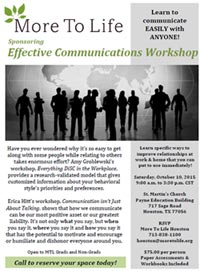
Effective Communications Workshop

Hello All!

I highly recommend this Communications Workshop for anyone interested in having better  communication skills, to learn best ways to be heard when you speak, to deepen your listening skills, and to create more satisfaction in your relationships and intimacy with others.

Best Wishes!

Denise

Effective Communications Workshop Details

Have you ever wondered why it’s so easy to get along with some people while relating to others takes enormous effort? Amy Groblewski’s workshop, Everything DiSC in the Workplace, provides a research-validated model that gives customized information about your behavioral style’s priorities and preferences.effectivecommunicationsworkshop2

Download Flyer

Erica Hitt’s workshop, Communication isn’t Just About Talking, shows that how we communicate can be our most positive asset or our greatest liability. It’s not only what you say, but when you say it, where you say it and how you say it that has the potential to motivate and encourage or humiliate and dishonor everyone around you.

Call to reserve your space today!

Saturday, October 10, 2015
9:00 a.m. to 3:30 p.m. CST

St. Martin’s Church
Payne Education Building
717 Sage Road
Houston, TX 77056  | Map

RSVP with More To Life Houston
713-838-1100
houston@moretolife.org

$75.00 per person
Paper Assessments & Workbooks Included

Filed Under: areas of practice, couples counseling, Marriage Counseling, premarital counseling, relationship counseling
BY Denise O'Doherty

One Single Question That Can Make Your Spouse Feel Closer To You

– by Gary Thomas, paraphrased by Denise O’Doherty

There’s an old rabbinical story about how a spot was chosen to build a temple. Two brothers worked a common field and a common mill. Each night they divided whatever grain they had produced and each took his portion home.

One brother was single and one was married with a large family. The single brother decided that his married brother, with all those kids, certainly needed more grain than he did, so at night he secretly crept over to his brother’s granary and gave him an extra portion. The married brother realized that his single brother didn’t have any children to care for him in his old age. Concerned about his brother’s future, he got up each night and secretly deposited some grain in his single brother’s granary.

One night they met halfway between the two granaries, and each brother realized what the other was doing. They embraced, and as the story goes, because they each came from a place of love, that is where the temple was built. It was deemed sacred because it was the place where human beings discovered in each other, love, kindness and understanding.

intimacy2Marriage can be that sacred place.

What makes this story so moving is that two individuals had greater empathy for the difficulties the other faced rather than their own difficulties. Selfish marriage is the opposite: each partner feels their own pain more intensely and are either unaware or calloused in regards to their spouse’s pain.

What if you asked your spouse this simple question: “What makes your life most difficult?” Or perhaps, to start things off, you could imagine what must be difficult about their life and then bring it up: “I bet it must be really difficult for you to….

As they respond, your sole aim is to truly understand the challenges your spouse faces on a regular basis. For the purpose of this exercise, don’t try to solve the problems. Avoid counseling your spouse as well. Certainly, do not try to convince them that whatever is bothering them shouldn’t—as if they are over-reacting or being unreasonable.

Just listen and try to understand.

This single question may sound too simple and too small to have any impact, but it can generate more feelings of intimacy than you might imagine making your spouse feel much closer to you.

Just try it, and you’ll see.

Filed Under: couples counseling, Marriage Counseling, relationship counseling
BY Denise O'Doherty

True Love

The most damaging instance of “identity theft” is when hate masquerades as love.

I see it all the time, particularly in dating relationships.

premarital counseling, couples counseling, Marriage Counseling, relationship counselingA young man “falls in love” with a woman, woos her until he has monopolized her social calendar and then weeks or months later, drops her. Once she has abandoned everything for him, he abandons her. But it was all done in the name of love. His feelings once told him it would never end, so he demanded absolute commitment and focus. But now that the feelings have changed, so apparently has his view of “love.”

A premarital couple the jackpot when the young man finally said, “Okay, now I get that loving her means I’m supposed to support her to be the best she can be”. What this means is being concerned about your partners well being (emotionally, physically, sexually and above all spiritually). The relationship comes after that.

Our primary aim in every relationship, including marriage and dating, is help each other grow and to bring out the best in each other.

If you start spending every extra moment together and the relationship doesn’t last, you’ve pulled this person from their friends and their life focus. When the relationship crashes, their life crashes and has to be completely rebuilt. Leaving someone in that condition is like mortgaging their house so you can gamble with their money to get rich. It’s reckless, it’s selfish it’s the opposite of love.

When a married woman uses sex to manipulate or humiliate her husband, that is not love. That’s taking something precious and using it as an evil weapon. When a married man considers it a betrayal if his wife has any other significant relationships that is also not love. He’s controlling her in the name of preserving some misguided sense of marital loyalty.

Love is always—always—doing what is best for the other person. Not what is best for you. Not what will make them like you or need you or want you. Love is kind, it is patient, it is strong enough to do what is right instead of giving way to the weakness of selfishness or feelings, it is self-sacrificing, it never rejoices in wrongdoing, it doesn’t insist on its own way.

Don’t be fooled by self-interest masquerading as love. Insist on love.


-Copied and revised from an article by Rev. Gary Thomas

Filed Under: couples counseling, Marriage Counseling, premarital counseling, relationship counseling
BY Denise O'Doherty

The Importance of being “All In” In Your Relationship

The following article was written by Gary Thomas from a Christian perspective regarding the importance of being “all in” a primary relationship. (A common topic in marriage and relationship therapy). The IMAGO model would support this perspective. Although he writes from a heterosexual perspective, this works for gay and lesbian relationships and other spiritual perspectives as well. See what you think……

“Bachelor Disaster” by Gary Thomas

gary-thomasIt was almost as painful as watching a man slowly bleed to death; instead, I was watching a marriage die before it had even begun.

The Bachelor wanted to be known as a good guy. He was in a ridiculous and silly situation (trying to artificially choose a wife while simultaneously dating 25) but even so, he couldn’t have made it worse.

When he was finally down to the final two women, the guy couldn’t make up his mind. He kept worrying about whether the one he was rejecting would be better for him than the one he was choosing. He feared he might be making a mistake, he actually called it “the hardest decision I’ve ever had to make.”

Every syllable of those pathetic, self-absorbed sentences were caught on tape and were daggers to the joy of his future marriage (assuming the marriage actually happens). His “fiancé” said she decided not to watch the painful ordeal, but if the bachelor thinks she never will, or that she’ll never hear about it, he’s delusional. Besides, she already did hear about it. The host brought it up! And the future bride’s refusal to hear it firsthand testifies to the hurt already inflicted by a complete misunderstanding of love, marriage, and marital unity/intimacy.

Men, if you want a satisfying marriage, you have to be all-in focused on one woman. You have to prize her above all women. You have to make her believe there is no other woman you could possibly be drawn to in comparison.

You can’t cleave if you don’t first leave “Leave” doesn’t just mean your parents—it means every other human affection.  The best marriages are “all in.” They are built and sustained by the attitude, “I will offend everyone else, if I have to, in order to affirm, value, and cherish you.”

If you’re not ready to make that commitment to a woman, you’re not ready to be married. It is pitiful for any husband to let any woman besides his wife think that he’s “on the market” or may soon be.

To share something “special”—emotional or physical—with anyone other than your spouse is to subtract from your marriage. It’s to kill it with a thousand small cuts. It will slowly bleed your marriage to death.

Marriage is nurtured by its exclusivity and it is assaulted by the Bachelor’s disastrous mindset, whether you adopt that mindset as a single man or as a husband married for ten or twenty years.

Men, you can’t cleave if you don’t leave—everything, and everyone. True “cleaving”—a sense of oneness, a solid, impenetrable unity—is so fulfilling. Without it, you get all the responsibility and limitations of marriage without the soul fulfillment. That’s as frustrating a trade as you’ll ever make. You can only live with that for so long without wanting the “escape” of divorce.

All in, or not in. Those are really the only two choices a man should focus on when choosing a mate. If a woman thinks the man isn’t there, she’s being equally foolish tying her life to half of his heart and half of his mind.

Excerpt from GaryThomas.com

Filed Under: couples counseling, Marriage Counseling, relationship counseling
BY Denise O'Doherty

Relationship Counseling: Increase Intimacy By Learning Your Love Language

Effective Communication - Communication is the key to maintaining a healthy relationship. Communicating with your significant other requires both listening and expressing your thoughts and desires.
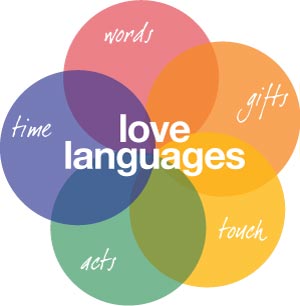
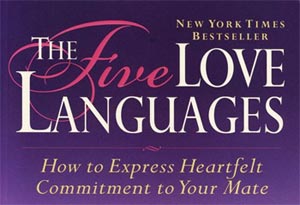

Gary Chapmans’ book, The 5 Love Languages, suggests that there are 5 ways that we SHOW and RECEIVE love. His languages are: gifts, quality time, words of affirmation, acts of service, and physical touch. Chapman explains that it is important to learn the ways in which you like to show those that matter most that you love and appreciate them, as well as how you like to receive love from others.

Here are Gary Chapman’s 5 Love Languages:

Words of Affirmation

Hearing the words, “I Love You,” are important, but hearing the reasons on why someone loves you are just as important. Words of appreciation, encouraging works, and kind words are a powerful communication of love. Verbally communicating your love must be done with a humble heart, kindness, tenderness and sincerity.

Quality Time5love-languages2

Nothing says “I love you, like giving your beloved your undivided attention. A person who loves through quality time, or needs to be loved with quality time need that one on one time, with no TV, cell phone on vibrate, no outside influences, just one on one time. Quality time is not just being at the same place at the same time. It involved interaction and sharing the time together. Maintaining eye contact, no multi-tasking, and actively participating in the conversation are a must for the QT lover.

Gifting

Gifting should not be confused with materialism. Receiving gifts as a form of love focuses on the thoughtfulness and effort behind the gift, and vice versa for the gifter who shows love through gifting. The gifter is expressing that their sweetheart is cared for and prized for above whatever was sacrificed to bring the gift. The one showing their love through gift giving often goes through a great deal of thought and planning in an effort to provide the perfect gift at the most appropriate time.

Acts of Service

Showing love through acts of service display the devotion that one has towards their object of affection. Attempting to ease their workload and make their life easier bring pleasure to the acts of service lover. Actions such as housework, cooking meals, laundry, yard work, running errands, dealing with finances are just a few examples of acts of service one might perform to show their love and devotion. These acts, no matter how big or small, require thought, planning and effort. For the loved one who likes to receive love through acts of service, they see them as a display of love and commitment.

Physical Touch

Don’t confuse this love language as just related to sex. Physical touch can be hugs, pats on the back, hand holding, caressing as you pass each other, and kissing when you leave or return to the home. These small acts of affection build excitement and display loving and caring. Love touches don’t take much time and the holding hands, kissing, hugging, touching each other when you leave the house and when you return may involve only a brief kiss, but speaks volumes.

The Importance To Learn Your Love Language

If we use this model of showing and receiving love, it is important to have a healthy relationship to understand two things:

  1. How you like to receive and show love
  2. How your significant other likes to receive and show love.

Knowing your bent for showing and receiving love, and fully understanding the way your significant other shows and receive love will bring a new level to your relationship. Understand that you may or may not match up with your mate. It may take work on both parts to understand these new concepts of showing and receiving each other’s affection.

How To Communicate Your Love LanguageGary Chapman's 5 Love Languages

In many relationships, the concept of love languages is foreign. Opening the lines of communication between you and your partner will allow you both to express your thoughts, observations and desires to each other without being criticized. The goal is to build a deeper and long lasting relationship while enjoying each other’s characteristics that you bring to the relationship.

Gary Chapman does offer an assessment: http://www.5lovelanguages.com/profile/couples/

This is a great tool that you and your partner can take and learn the best ways to communicate love and build a lasting relationship.

Filed Under: areas of practice, couples counseling, Marriage Counseling, relationship counseling
BY Denise O'Doherty

The “Grey” Area of 50 Shades of Grey

This past weekend was Valentine’s Day where couples across the globe celebrated their love for one another by spending special times together, and showering each other with gifts, cards, flowers, and love.

50 Shades of Grey, marriage counseling, relationship counseling, relationship therapy, healthy sexual relationshipsThis past weekend also marked the much anticipated release of a movie based on the E.L. James bestseller, 50 Shades of Grey. 50 Shades of Grey is a erotic romance novel where a business exec who is into BDSM develops a relationship with a college student. The novel tells the story of their sexual romance in explicit detail showing the arousal achieved by pain, bondage, and other S&M practices.
This novel and movie portray intimacy and love mixed with untraditional practices that connect love with pain, control, power and submission.

Bestselling author and international speaker on relationships, Gary Thomas, sheds some light on the portrayal of love and intimacy in heterosexual relationships as depicted in 50 Shades of Grey. Here are some of the problems (paraphrased)  he sees with “Grey”.  Whether you’ve seen the movie or read the book, you can reflect on these comments to confirm your own ideas on love and sex and what you think is healthy and fulfilling in relationships.

  1. The way our brains operate, if you need pain to get sexually excited, that level of pain becomes normative and routine, so you have to increase the level of pain to get the same excitement. In a long-term, lifelong sexual relationship, that’s a problem.
  2. When sex recreates past abuse instead of providing a healing alternative, it cements the soul in dysfunction rather than releasing the soul into healthy intimacy.
  3. If a couple ignores the spiritual side of sex, their satisfaction in the bedroom is living on borrowed time.
  4. It’s simply foolish to feel intimidated by or envious of the sexual relationship of a couple that requires a billionaire’s income and schedule to sexually excite each other.
  5. Daily kindness will get a woman in the mood far more certainly than sanitized metal.
  6. Soul-satisfying sex without commitment is as real as chocolate cake without calories.
  7. An abused man who expresses his hurt with violent sexual acts against a woman is “healed” by his sexual partner being willing and submissive? The last time that happened in real life was never.
  8. Love isn’t expressed by accepting intentional pain; it’s built by giving and receiving unselfish pleasure.
  9. While an occasional blindfold might be enticing, far more satisfying is to see the look in another’s eyes when they desires and adores you.
  10. Healthy men and women want to be desired for who they are, not for the toys they can afford.
  11. The best mark of fulfilling sex isn’t a bruise or a scratch—it’s that special glance between each other two hours later.
  12. It takes far more bravery to commit yourself to one partner for life than it does to commit yourself to a new sexual encounter.
  13. What’s nobler? A married couple thinking up new ways to give pleasure or a dating couple thinking up new ways to give pain?
  14. A strong man isn’t looking for a young woman to dominate; he’s looking for a woman who inspires him, a partner to share life with, and a fellow parent with whom he can build a family.
  15. If a guy is “fifty shades of [messed] up,” he’ll bring you far more misery than pleasure as soon as you step out of the bedroom.
  16. A guy who has to control you in the bedroom won’t stop trying to control you in the living room… Or the kitchen, or the car, or anywhere else, for that matter.
  17. The best sex doesn’t require one person “training” another; it requires sharing and learning and growing together.

Read the Story in Full: 50 Problems with Grey

Love and intimacy are two things to be shared between people who cherish the connection they both have and want to nurture that relationship and grow it deeper. Introducing a action that may have adverse short and/or long term affects on the relationship should be thoroughly discussed and thought about prior to implementing it into the relationship.

Filed Under: couples counseling, Marriage Counseling, relationship counseling
BY Denise O'Doherty

Happy New Year and “Post-Romantic Stress Disorder”

Hello everyone and Happy New Year! It’s a good time to dig within and discover what you would like to have happen in your life this year. Make any goals you’d like. Goals give us direction and are an affirmation that you’re interested in fully living your life in the year to come. The new year stands before us, like a chapter in a book, waiting to be written. We can help write that story by setting goals and visioning our life as we would like it to be.

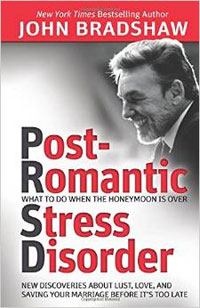
For my first blog of the year, I highly recommend John Bradshaw’s new book, “Post-Romantic Stress Disorder”. I read it on the plane recently coming back from NY.couples counseling, Marriage Counseling,  relationship counseling,

What a classic and profound book! His focus is on new discoveries about lust, love and saving your marriage before it’s too late. Basically it’s about what to do when the honeymoon is over.

His premise is that too many people break up marriages that are worth saving. He is a strong supporter of IMAGO Relationship counseling and agrees that in marriage we are there to heal our partners childhood wounds. Also that the infatuation stage is supposed to decrease in intensity, and when that happens, most people don’t know how to keep the romance and spark in their relationship. He says that being in-love is spontaneous, yet achieving a fully adult kind of mature love is not. It takes effort. He also says that there are things we’d all like to change about our partners, but we must be willing to change our self first. What I really like is that he confirms what I often tell couples, “couples who find satisfaction together are those who are willing to compromise and allow their partners to have their differences”. You don’t have to think alike to have a good marriage, you have to respect the differences. He also talks about how important it is to have a solid sense of self when entering a relationship and why it is essential. He writes about how to overcome shame and argue effectively. I think this book is particularly good for anyone thinking about couples therapy, marriage therapy or relationship therapy. But also, for individuals who want to know essentials of what makes a healthy relationship work.

A Chance To Learn More

I will be adding some of the concepts of this book in my class, on 2/28/15. “Successful Romantic and Intimate Relationships: How to Make Them Work”. You can register through Leisure Learning Unlimited, www.llu.com or 713-529-4414. It’s on a Saturday from 10am-12noon. Hope to see you there!

Register For  “Successful Romantic and Intimate Relationships: How to Make Them Work“

Filed Under: areas of practice, couples counseling, Marriage Counseling, relationship counseling, self esteem counseling
BY Denise O'Doherty

Two Tips for Avoiding Needless Stress When Someone Dies

Frequently in individual, couples and family therapy I hear the hurt and anger client’s feel when someone dies and end-of-life issues were not handled the way my client’s felt they should be. Families can be torn apart trying to make decisions during the stress of dealing with the death of a parent, sibling or child. While profound grief is inevitable; confusion, anger and long-term resentment can easily be avoided by the following preparations.

First, Y Collaborative has a workbook “Put Life in Order, Put Worry Away” to enable you to make decisions about how you want to be treated if you become incapacitated and cannot speak for yourself and for families to use as a start to a conversation before they are in the position to where they have to decide. Having important conversations about care and treatment before it becomes necessary takes all the stress out of decision-making and ensures that your wishes are clear. Peace of mind is a wonderful gift to give your family and, once completed, you know your wishes are clear.

I completed a workbook to make things easier for my loved ones and wish all the people I love had one too, so I could ensure that their personal wishes will be respected at the end-of-life.

Second, Nancy Rust, co-founder of YCollaborative,  also will assist you and your family, if this topic is sensitive or difficult, on how you can handle these important issues ahead of time and how you can have the conversations you need to have. You can reach Nancy at info@YCollaborative.com or 713-521-7699.


Now it is Truly Easy to “Put Life in Order and Put Worry Away.”

We are thrilled to announce that we’ve truly made it easy for you to put life in order and put worry away with the publication of the Texas edition of our new workbook. The workbook is now available for sale on our website and will provide one easy location where you can write down all the information you want your family, friends or doctors to have should you be involved in an accident or unable to speak for yourself.

We’ve provided contact lists, a wallet card, advance directive questionnaires, valid Do Not Resuscitate (DNR) and Organ Donation forms as well as helpful lists that tell you what to do in the first 24 hours after someone dies.

While we don’t provide a form for a will (although filling this out will probably make getting one much easier) we have tried, however, to provide everything else you may need to help communicate your wishes and desires should you be hospitalized or unable to speak.

What People are Say about “Put Life in Order and Put Worry Away.”

It is superb. I can see the work that you put into this book. It is very helpful. I hope (and will try) to spread the word about how it can help people, almost change lives. Thank you so much for creating this book. ~Lynn B. Houston, Texas


Order today as this is one decision that we know will give you and your loved one’s peace of mind.

Filed Under: couples counseling, Marriage Counseling, relationship counseling
BY Denise O'Doherty

The Importance of End of Life Planning: Y Collaborative Partnership

Have you ever wondered how someone would know what was important to you and gather all the necessary information regarding your personal wishes if you died? Y Collaborative represents a way of thinking to put life in order and put worry away by making decisions about issues before you are in the position to where you have to decide.

endoflifeplanning

Y collaborative gives you the tools to have meaningful conversations with family, friends, and trusted advisers about end of life decisions. Of course we all know how important it is to have a will, but what about other things affecting your life? If something were to happen to you, do you have someone who would take your pet? Does that person know who they are? Have you made financial decisions for them to care for your pet? Is there someone who knows which social / political organizations you would like to be informed of your passing? If you have no relatives in the state, would someone here know how to contact your siblings in other states? If you were to pass on, would someone have a record of your bank accounts with checking and savings account numbers, safe deposit number and key location? Sometimes loved ones are in the hospital and they have made it clear to you that they do not want certain procedures performed on them. Hospitals will routinely do some procedures that may go against someone’s personal wishes. Does someone know your last wishes? Most important, where do you keep all the information you would want someone to have?

Many people express in individual, couples and family therapy their feelings of hurt and anger when end of life issues were not handled the way they thought it should be handled for someone they loved. Hostility among siblings results when they disagreed over how a parent would want to be remembered. This can lead to years of confusion and resentment. All this negativity can be prevented.

Nancy Rust, founder of YCollaborative provides end of life planning services that gives you the peace of mind when making important decision about your well being and personal choices as you near the end of your life. YCollaborative, believes in planning ahead and making those tough end-of-life decisions in advance before they are needed in order to avoid someone else making those decisions for you. To make these important decisions, Nancy has created a workbook, that outlines all that important things we need to address so someone could easily have access to necessary information and our personal wishes. To learn more about Nancy and YCollaborative, contact her at http://www.ycollaborative.com or at info@YCollaborative.com, and by phone at 713-521-7699.


Filed Under: areas of practice, couples counseling, Marriage Counseling, relationship counseling
  • Previous
  • Page 1
  • Page 2
  • Page 3
  • Page 4
  • Page 5
  • Page 6
  • Page 7
  • Next
  • Facebook
  • Twitter
  • Google
  • YouTube
  • LinkedIn

Houston, TX 77019 | 713-823-4001 | Sitemap | Privacy Policy

Copyright © 2026 · All Rights Reserved · Maintained by Levy Marketing