
• Skip to main content
  • Skip to header right navigation
  • Skip to site footer
  • Home
  • About Denise
  • Forms
  • Fees & Policies
  • Online Classes
  • Upcoming Events
  • Contact
  • 713-823-4001
Denise O’Doherty

Denise O’Doherty

Licensed Professional Counselor, Licensed Marriage and Family Therapist, Drug and Alcohol Counselor, Registered Nurse

  • Relationship Counseling
    • Couples Therapy
    • Marriage Counseling & Family Therapy
    • Premarital Counseling
    • Domestic Abuse Counseling
    • IMAGO Relationship Therapy
  • Substance Abuse
    • Alcohol & Drug Addiction
    • SALCE Evaluations
  • LGBTQ+
    • Lesbian Therapy
    • LGBTQ+ Couples Therapy
  • Other Areas of Practice
    • Anxiety/Depression
    • BiPolar Disorder
    • Codependency/Personal Boundaries
    • Grief Counseling / Grief Therapy
    • Love Addiction/Love Avoidance
    • Overcoming Shame /Increasing Self-Esteem
    • Post Traumatic Stress Disorder
    • Dissociative Disorders
  • Gender Identity
    • Parents of Transgender Children
    • Gender Dysphoria
    • Cross-Dressing
    • Adult Children of Transgender Parents
  • Articles

Home » relationship counseling » Page 3

relationship counseling

BY Denise O'Doherty

Happy New Year and “Post-Romantic Stress Disorder”

Hello everyone and Happy New Year! It’s a good time to dig within and discover what you would like to have happen in your life this year. Make any goals you’d like. Goals give us direction and are an affirmation that you’re interested in fully living your life in the year to come. The new year stands before us, like a chapter in a book, waiting to be written. We can help write that story by setting goals and visioning our life as we would like it to be.

For my first blog of the year, I highly recommend John Bradshaw’s new book, “Post-Romantic Stress Disorder”. I read it on the plane recently coming back from NY.couples counseling, Marriage Counseling,  relationship counseling,
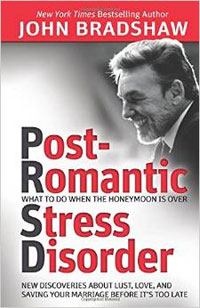
What a classic and profound book! His focus is on new discoveries about lust, love and saving your marriage before it’s too late. Basically it’s about what to do when the honeymoon is over.

His premise is that too many people break up marriages that are worth saving. He is a strong supporter of IMAGO Relationship counseling and agrees that in marriage we are there to heal our partners childhood wounds. Also that the infatuation stage is supposed to decrease in intensity, and when that happens, most people don’t know how to keep the romance and spark in their relationship. He says that being in-love is spontaneous, yet achieving a fully adult kind of mature love is not. It takes effort. He also says that there are things we’d all like to change about our partners, but we must be willing to change our self first. What I really like is that he confirms what I often tell couples, “couples who find satisfaction together are those who are willing to compromise and allow their partners to have their differences”. You don’t have to think alike to have a good marriage, you have to respect the differences. He also talks about how important it is to have a solid sense of self when entering a relationship and why it is essential. He writes about how to overcome shame and argue effectively. I think this book is particularly good for anyone thinking about couples therapy, marriage therapy or relationship therapy. But also, for individuals who want to know essentials of what makes a healthy relationship work.

A Chance To Learn More

I will be adding some of the concepts of this book in my class, on 2/28/15. “Successful Romantic and Intimate Relationships: How to Make Them Work”. You can register through Leisure Learning Unlimited, www.llu.com or 713-529-4414. It’s on a Saturday from 10am-12noon. Hope to see you there!

Register For  “Successful Romantic and Intimate Relationships: How to Make Them Work“
Filed Under: areas of practice, couples counseling, Marriage Counseling, relationship counseling, self esteem counseling
BY Denise O'Doherty

Bellaire Couples Therapy & Marriage Counseling

Couples come to therapy for many reasons butcouples therapy houston, couples therapy houston, couples counseling houston, marriage counseling houston, marriage therapy houston, couples therapy, relationship therapy houston, couple therapy, marriage counseling in houston, couples counseling houston tx, houston marriage counseling, marriage and couples therapy, couples therapy houston tx, marriage and family therapist, houston relationship therapy, couple therapy houston tx, relationship therapist houston, marriage and family therapists, marriage counseling, couples counseling most frequently for one or more of the following: better communication, more trust, more emotional intimacy or more sexual intimacy.

Often, one partner wants the other to have more empathy, compassion and a better understanding of their perspective. Sometimes people don’t feel safe asking for what they need or want in the relationship. Sometimes people ask for what they want but never seem to get it. Whatever the reason, couples often reach an impasse, unable to get the empathy and understanding they need from each other by themselves.

Statistics today identify the four predictors of divorce to be:
Criticism,  Defensiveness, Withdrawal, and Contempt

By eliminating these adverse coping skills and replacing them with loving and effective skills and techniques, relationships improve. Trust, communication and a loving connection can be restored and re-established.

How Couples Therapy Can Help

Therapy can provide lasting and positive results for couples to have increased satisfaction, and feel more love and connection in the relationship. Couples get faster results when both people are committed to making a positive change.

Therapy gives both people insights about what they want to see differently in themselves and what they want to see differently in their partner and the relationship. It focuses on discovering unmet needs, lost parts, and overcoming defensiveness that prevents intimacy. Therapy promotes insight to give you additional ways to perceive the problems and additional ways to get results.

Together we will:

  • Identify the issues and conflicts that prevent intimacy and safety.
  • Identify factors that you and your partner do to sabotage what you want
  • Help you develop insights and skills to let go of what’s not working and get what you need.
  • Use cutting edge communication skills and techniques to change counterproductive and upsetting behavior
  • Look at how you can support each other effectively and genuinely through the changes you make
  • Create a space where you reach a new level of success in your relationship

On the first visit, I usually ask the couple to come up with three responses to:

“This relationship would be better for me if……1)…. 2)….. 3)….. ”.

How I Can Help

I see my role giving attention, couples therapy houston, couples therapy houston, couples counseling houston, marriage counseling houston, marriage therapy houston, couples therapy, relationship therapy houston, couple therapy, marriage counseling in houston, couples counseling houston tx, houston marriage counseling, marriage and couples therapy, couples therapy houston tx, marriage and family therapist, houston relationship therapy, couple therapy houston tx, relationship therapist houston, marriage and family therapists, marriage counseling, couples counselingsupport and direction to help couples develop what they need to make a break-through rather than a break up. Most therapy is short term.  I teach effective skills that you can use at home. The goal of therapy is to make changes so the couple will have increased satisfaction and feel more love and connection in the relationship.
Pre-Marital Counseling

I also meet with couples prior to weddings and holy unions. Pre-Marital counseling gives couples the opportunity to look at issues that often come up in relationships before they come up! This gives the couple the chance to see where they have differences in values and beliefs, and how they can prevent conflict when these differences arise. You don’t have to agree on everything to have a good relationship, but you have to respect the differences.  I have a pre-commitment questionnaire that addresses relationship issues. These include: money, relatives, children, vacations, work, household chores, sex, dealing with crisis times of life, fidelity, romance, use of alcohol, tobacco, marijuana and other drugs, communication rules, personality differences, role of friends, physical appearance, jealousy, cultural background issues, personal goals, pre-nupual agreements and blending families. Discussing your areas of concern prior to your big day, will give you an insightful and valuable approach to minimizing future problems and maintaining respect for your partner and your relationship.

Let Us Know How I Can Help!

[contact-form-7 id=”1467″ title=”landing-page”]

Filed Under: couples counseling, Marriage Counseling, relationship counseling
BY Denise O'Doherty

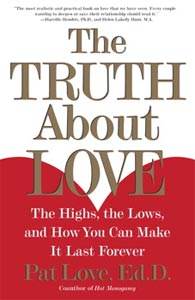
The Truth About Love – The Good The Bad, & The Ugly

In Pat Love’s book, “The Truth About Love“, she shares various misconceptions truth-about-love-bookabout relationships. I have turned these into the following TRUTHS about relationships as a guide for evaluating yours.

  • Relationships are never perfect. Problems don’t mean it wasn’t meant to be. It just means you have to work them through.
  • Once love dies, you can get it back with noticing, giving each other attention and celebrating the love and life you have. Happiness is wanting what you have.
  • Relationships are more than just chemistry.
  • It takes more than love to have a good relationship. Particularly trust, respect and good communication.
  • You can be in love and still be attracted to other people. Being in a committed relationship means that you still find others attractive and enjoy others being attracted to you, but you don’t act out on it.
  • It’s not about meeting the right person as much as it is about becoming the right person. If you work on being the best you can be, it is likely you will attract someone who appreciates you and whose values are more likely to be like yours.

The Four predictors of divorce are: Criticism, Defensiveness, Withdrawal and Contempt.

Therefore……

1) Instead of criticizing, ask for what you want. And when your partner criticizes, ask “What do you need?” and “How can I help?”

2) When you find yourself getting defensive: Stop. Start over. Call tome out. Apologize. Ask for more information. Take a deep breath.

3) When your partner withdraws, give him/ her more time and space. Find a way to manage your anxiety until the mood shifts. Entertain yourself. Do something fun. When you withdraw, let your partner know you need some time alone and about how long you need. If your withdrawal has nothing to do with the relationship, let this fact be known. If you have a problem, speak up.

4) When there is contempt between the tow of you, note this as a sign that the relationship could be in serious distress. Take time out to restore the good feelings between you. Do those activities that always work to bring you closer together.

These ideas and suggestions are often used in couples therapy and marriage counseling.

Good relationships give incredible rewards and unlimited opportunity for love and living a fuller life. Keep this in mind for your special relationship.


Filed Under: couples counseling, Marriage Counseling, relationship counseling
  • Previous
  • Page 1
  • Page 2
  • Page 3
  • Facebook
  • Twitter
  • Google
  • YouTube
  • LinkedIn

Houston, TX 77019 | 713-823-4001 | Sitemap | Privacy Policy

Copyright © 2026 · All Rights Reserved · Maintained by Levy Marketing